
Restoring the Grand Fountain at Beechwood Hotel
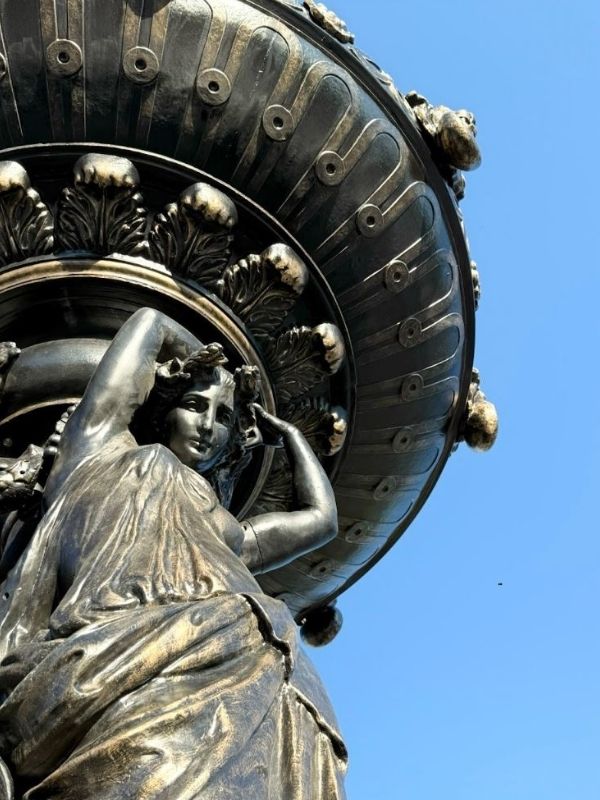
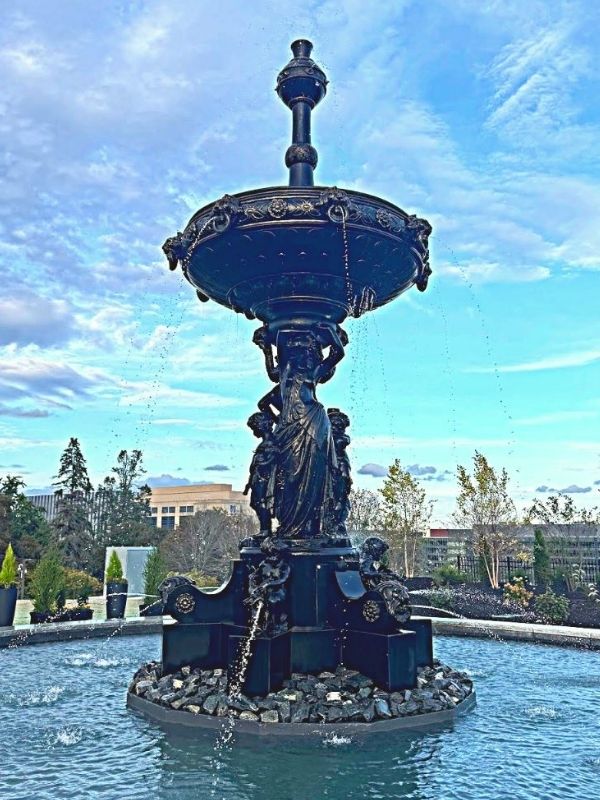
Buccacio Sculpture Services was honored to restore the historic “Grand Fountain” at the Beechwood Hotel in Worcester, Massachusetts. Originally fabricated in 1869, the monumental fountain had suffered decades of deterioration before being carefully recovered and brought back to life.
Through a blend of conservation, metal casting, engineering, and modern 3D technology, BSS restored original elements, recreated missing ornamentation, and integrated modern water and lighting systems while preserving the fountain’s historic character. Today, the fountain once again stands as a centerpiece of the Beechwood Hotel courtyard.
Project Snapshot
A 19th-century landmark brought back to life in Worcester, MA
Location
Beechwood Hotel, 363 Plantation St, Worcester, MA
Overall height
27 ft
Lower basin diameter
50 ft
Original fabrication
1869, decorative cast iron with copper electroplating
Scope
Assessment, conservation, re-fabrication, engineering integration, pump house and water-effects design, lighting and elevations, reinstall, and commissioning
The Story
When the Beechwood Hotel recovered the remnants of a grand 1869 fountain, they asked Buccacio Sculpture Services to bring it back to life. Our job was part detective work and part fine craft. We studied every surviving piece, figured out what the original makers intended, and mapped a path to make the fountain beautiful, durable, and easy to maintain.
Think of it like restoring a historic cathedral. Every column, arch, and carving must be studied, some strengthened, others completely rebuilt, all while preserving the original artistry that defines its soul. That is what we did here with the “Grand Fountain” —reviving a monumental work of art in cast iron, bronze, aluminum, and water—reuniting old-world craftsmanship with modern engineering precision.
The result is a working centerpiece that respects its 19th century look and adds reliable 21st century systems, inviting guests to pause, listen, and enjoy.
Historical Fabrication and Findings
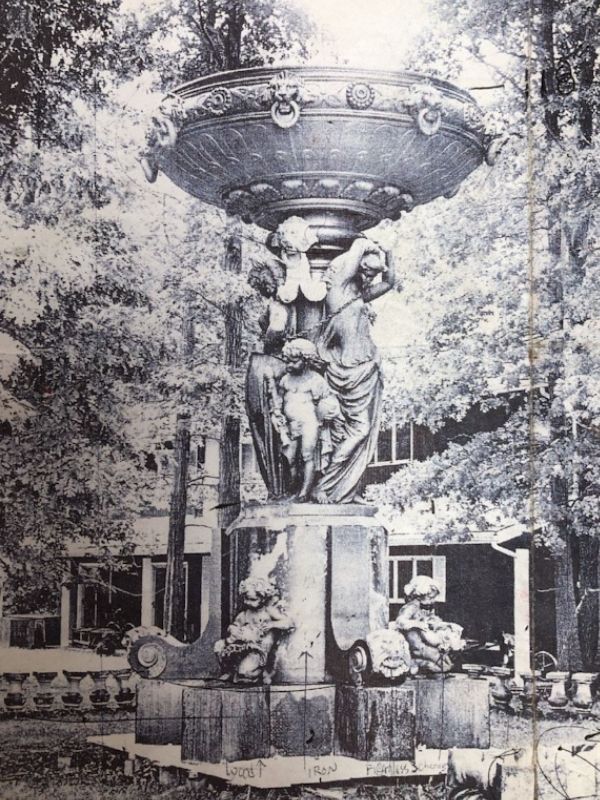
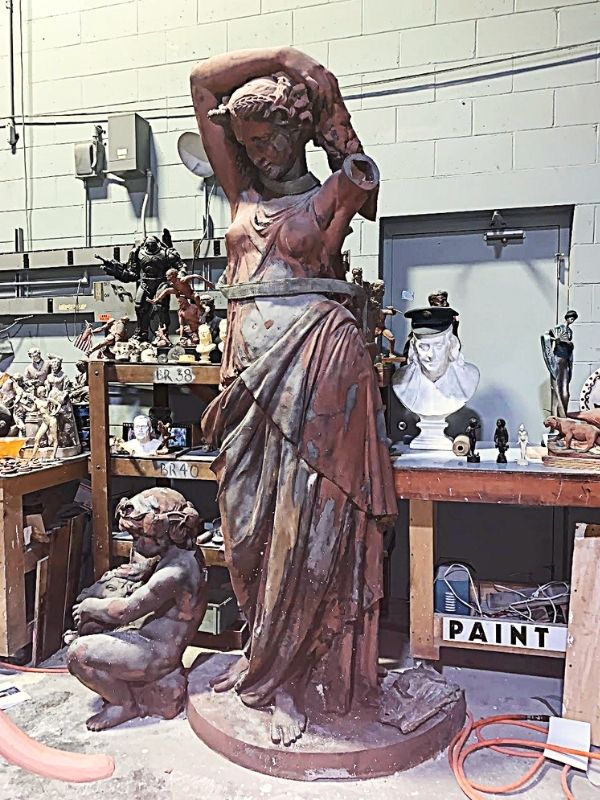
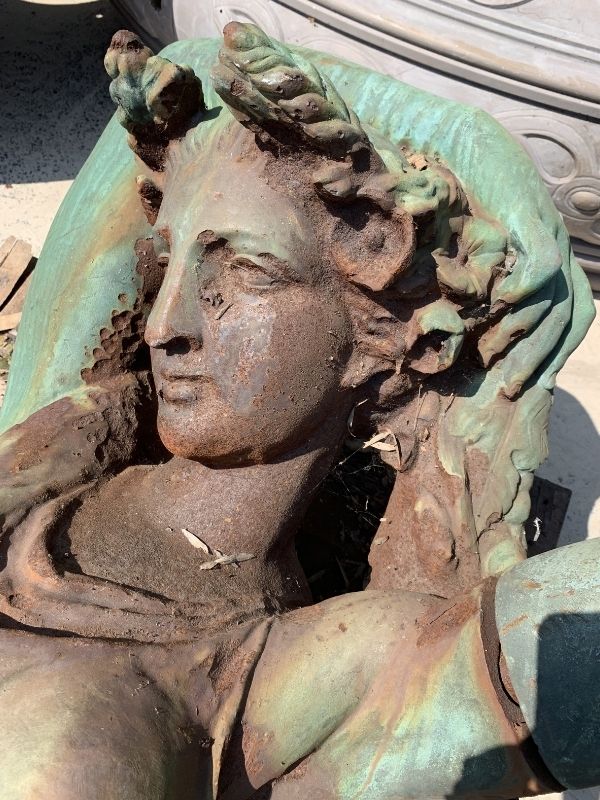
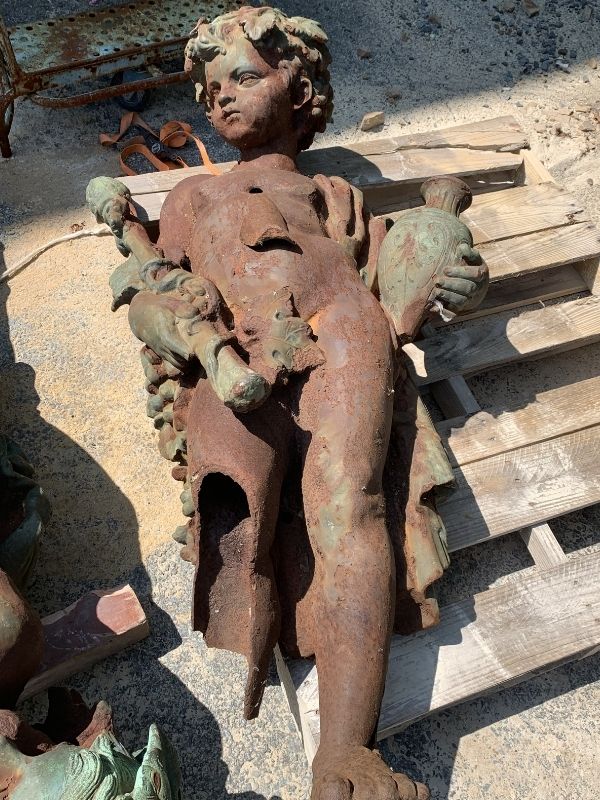
Only about one third to two fifths of the original cast iron assembly could be recovered. Many pieces showed cracked sections and flaking copper electroplate. Copper electroplating is a thin copper skin that was added long ago to help the iron resist rust and to give it a richer color. Over time, water and minerals created electrolysis, which is a tiny electrical reaction between metals that slowly eats them away. Imagine what happens to a battery when the terminals get crusty. That is similar to what was happening to the fountain.
In the 1980s, a partial rebuild added a mild steel core and a fiberglass upper bowl. Fiberglass is light but it flexes and weathers differently than metal. Over decades, those differences caused misalignments and leaks. Our first task was to separate what could be saved from what needed to be remade, then design a materials and joining strategy that would survive outdoors, carry water, and look cohesive.
Conservation, Re-Creation and Metalwork
Cast iron
We removed the remaining copper electroplating where it was failing, stabilized surfaces, and welded hundreds of linear inches of cracks. Welding is like gluing with molten metal. The cracked edges are cleaned, heated, and fused back together so the piece becomes one strong part again. Some original elements were sound enough to keep. Others were too far gone and were reproduced one to one.
1980s mild steel framework
We reviewed the internal steel skeleton with the structural engineer for configuration, weight, and load path. In simple terms, we made sure the internal frame carried the fountain like a sturdy spine, then reinforced it where needed and tied it safely to the historic and new components.
Upper bowl
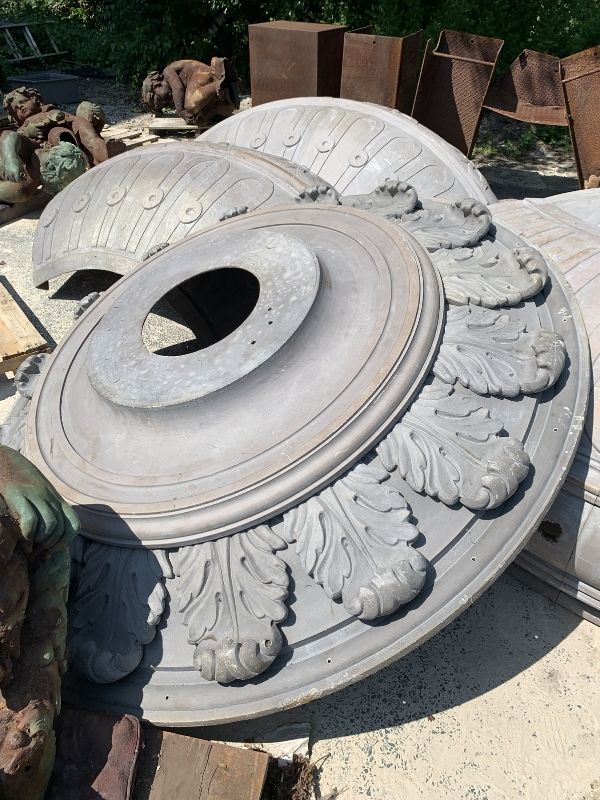
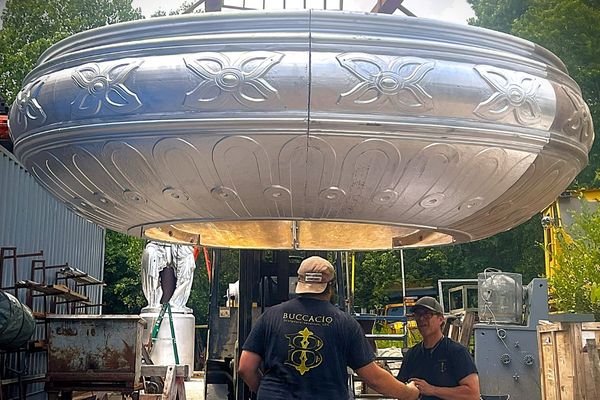
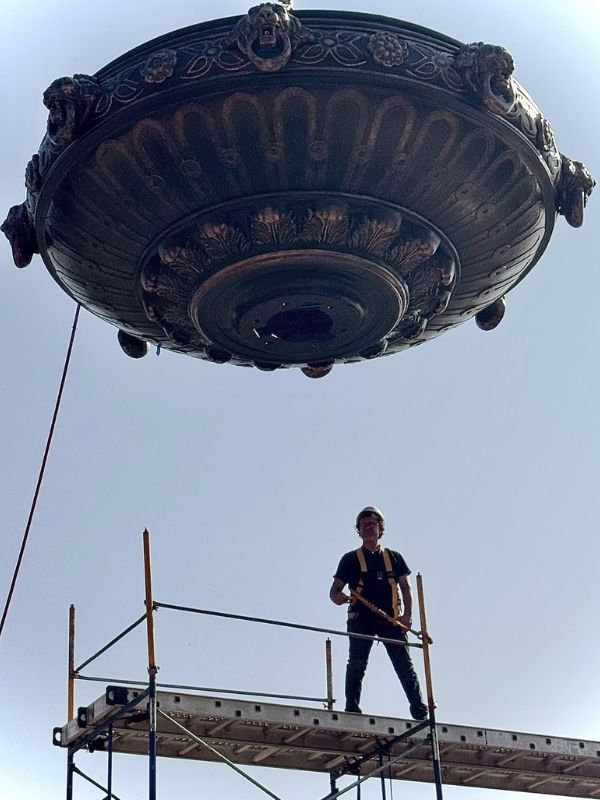
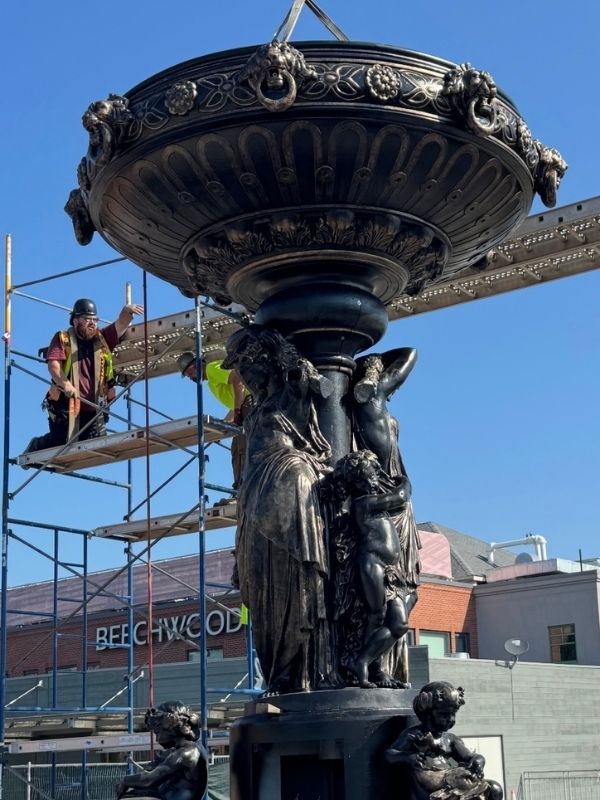
We replaced the fiberglass bowl with a newly cast aluminum bowl for durability and stability. Aluminum is light, strong, and does not rust. It holds its shape and connects cleanly to iron and steel when the joints are designed correctly.
Lost or degraded ornament
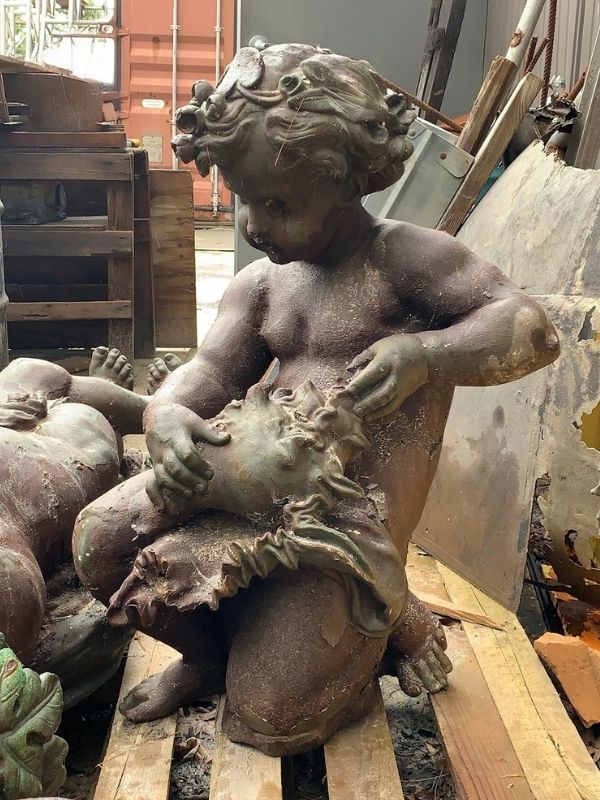
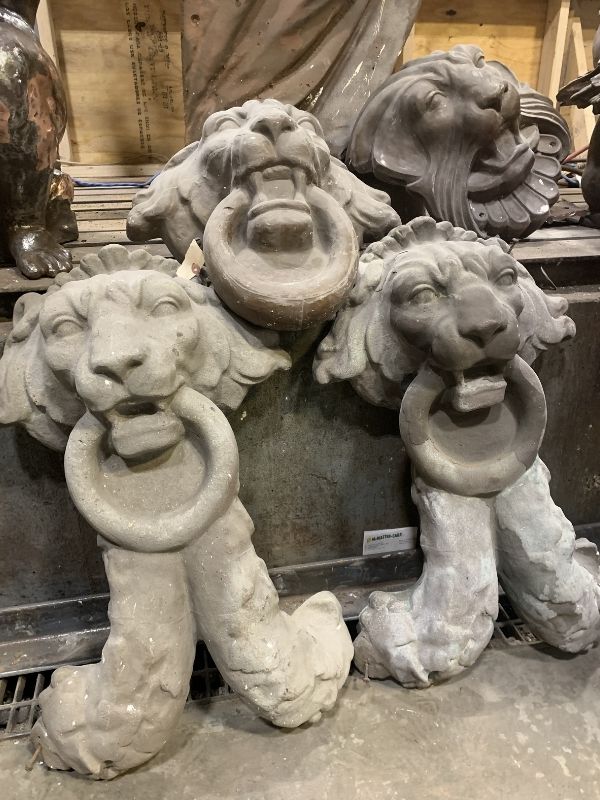
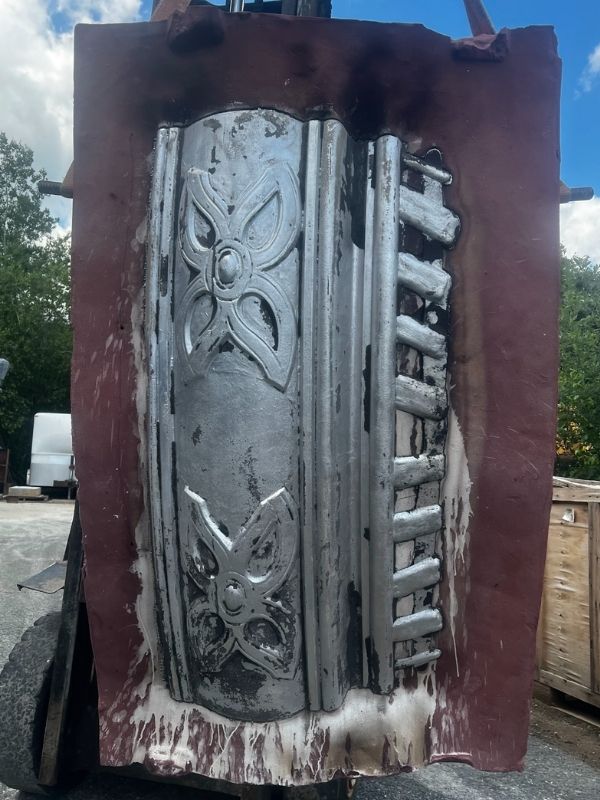
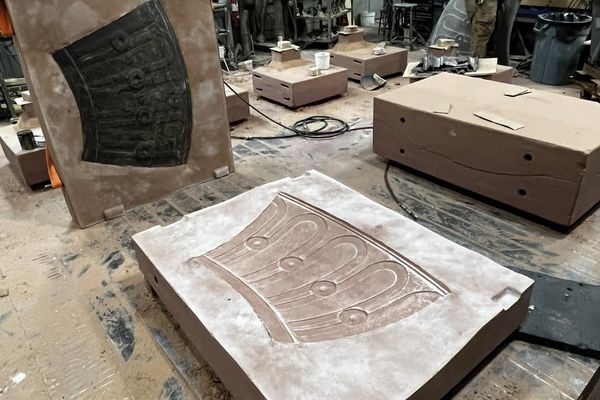
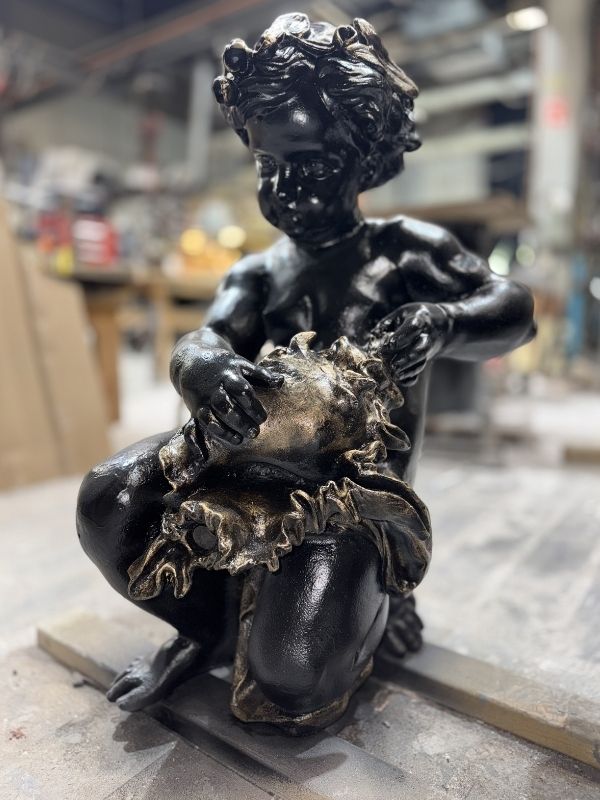
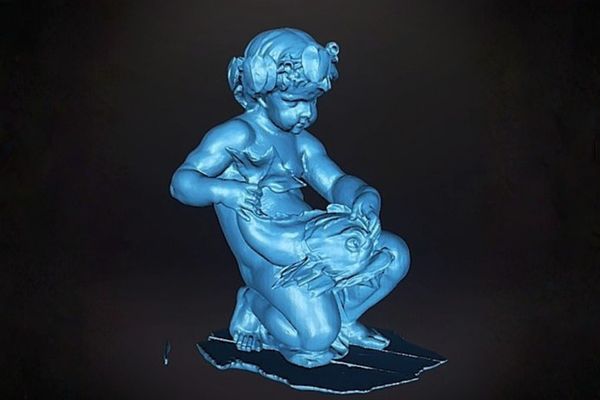
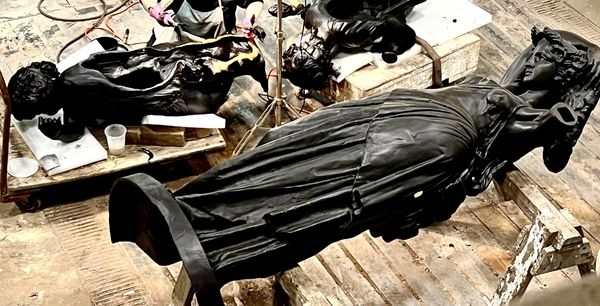
The cherubic figures and missing sections were 3D scanned and digitally refined. 3D scanning is like taking millions of tiny measurements so a computer can remember the shape. From that digital model we made molds, then cast new parts at BSS for precise fits and authentic surface character.
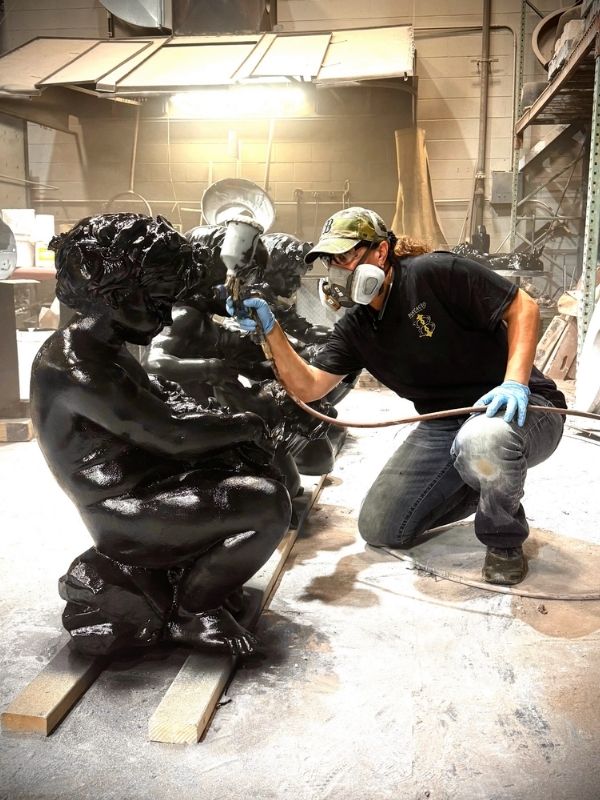
Our in-house capabilities in mold making, metal casting, and fine finishing kept the quality consistent from scan to cast to patina, which is the final surface color and protective finish.
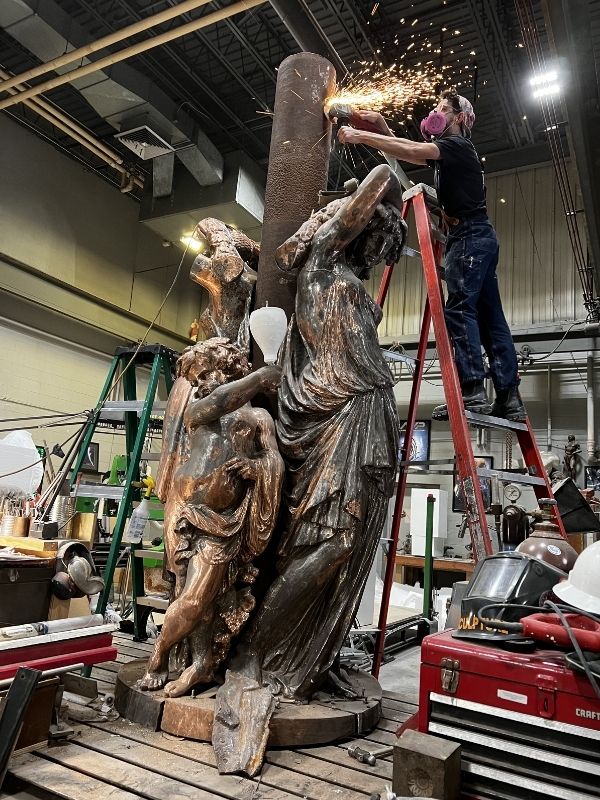
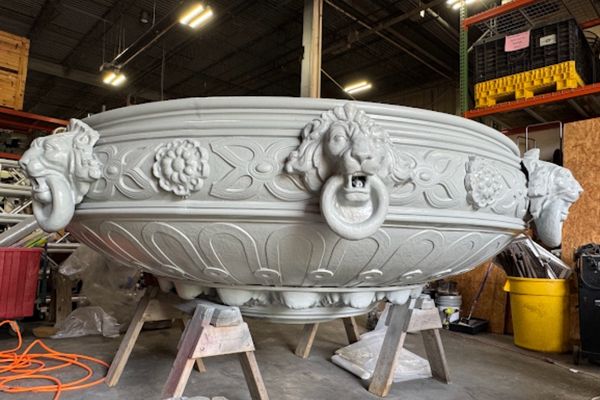
Recreating the Missing Cherubs
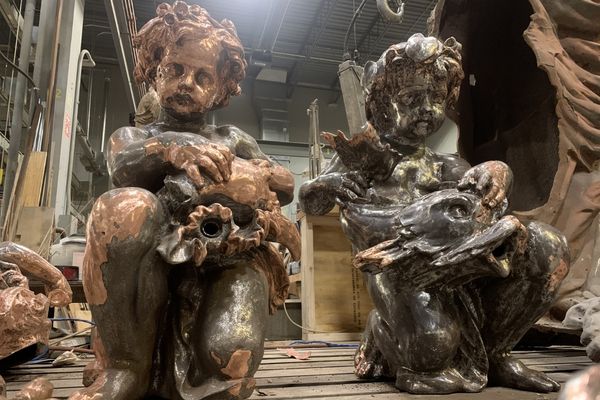
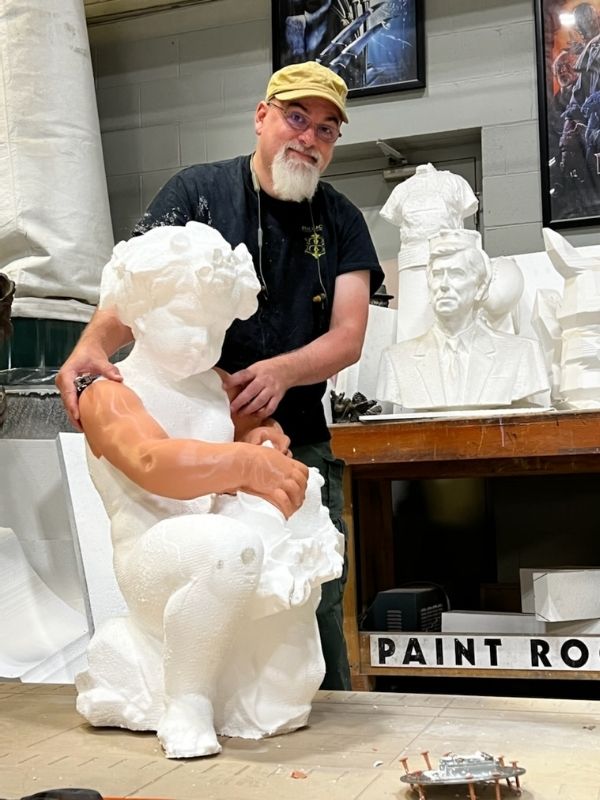
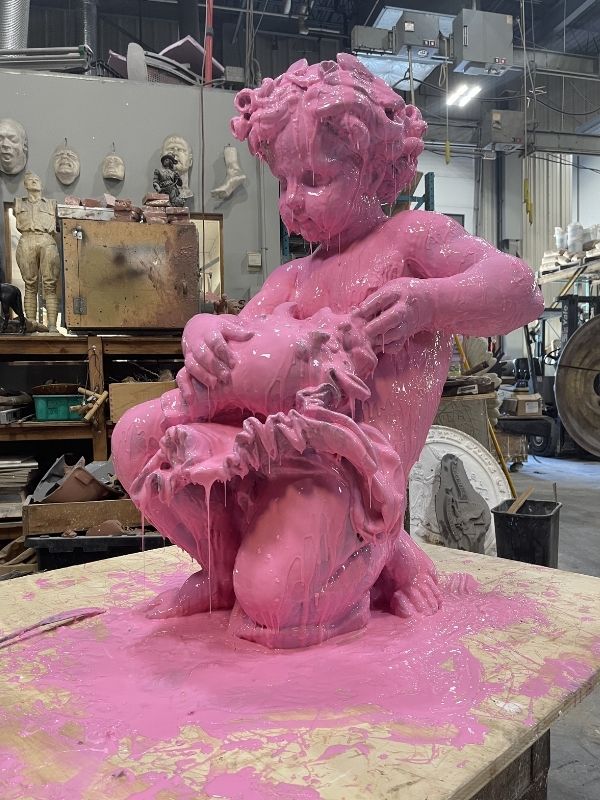
Several of the fountain’s original cherubic figures were damaged beyond repair or missing entirely. To recreate them accurately, BSS combined traditional foundry techniques with modern 3D technology.
We began by 3D scanning the surviving cherubs, capturing millions of precise measurements to preserve every detail and surface texture. The digital models were then refined in-house to repair damage and recreate missing sections based on the original forms.
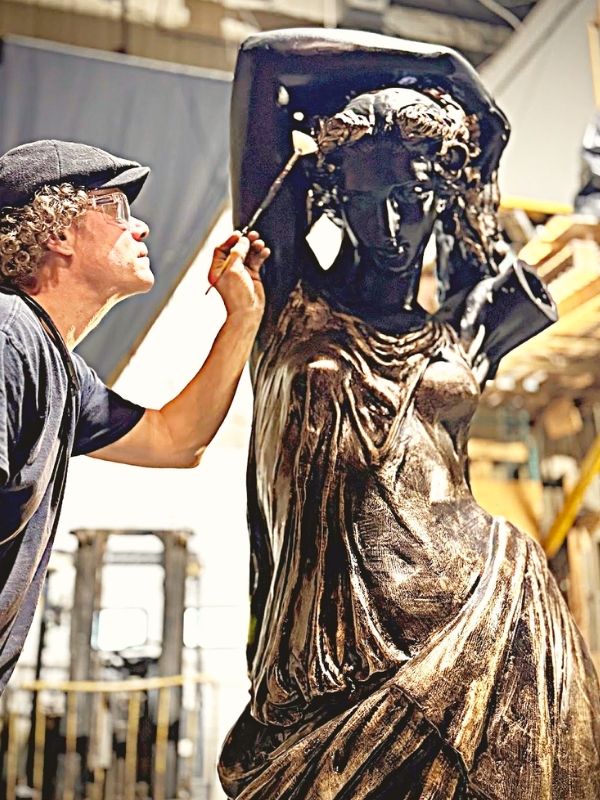
From these models, we produced full-scale 3D printed patterns used to create new molds for casting. Each replacement cherub was then hand-finished and patinated to match the restored historic elements, completing the fountain as a cohesive and historically faithful work.
Galvanic Isolation and Long-Term Stability
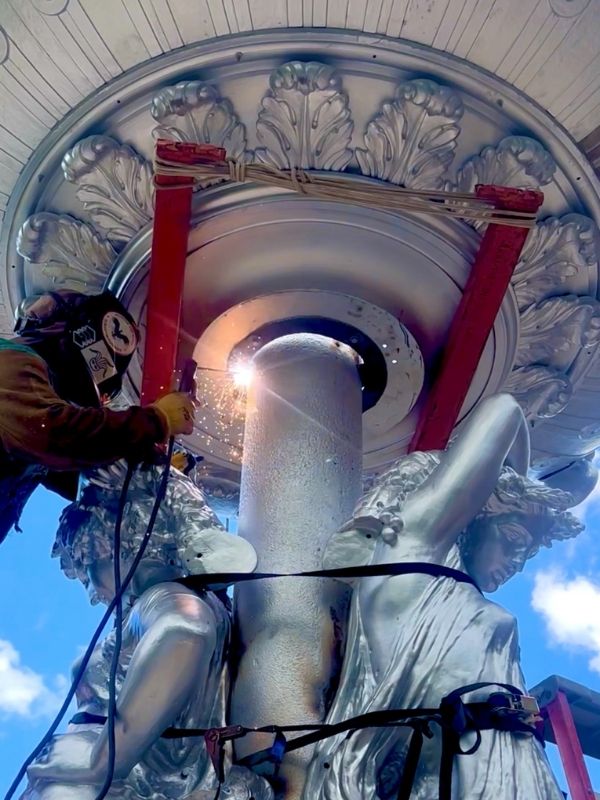
The restored assembly combines cast iron, mild steel, and aluminum. When different metals touch and get wet, they can act like a tiny battery and one metal slowly sacrifices itself. To prevent that, we installed rubberized isolation membranes and nonconductive gaskets at every metal to metal interface. Picture placing a thin rubber mat between two coins so they cannot zap each other. This simple barrier greatly reduces galvanic corrosion and extends service life.
Water Effects, Pump House and Controls
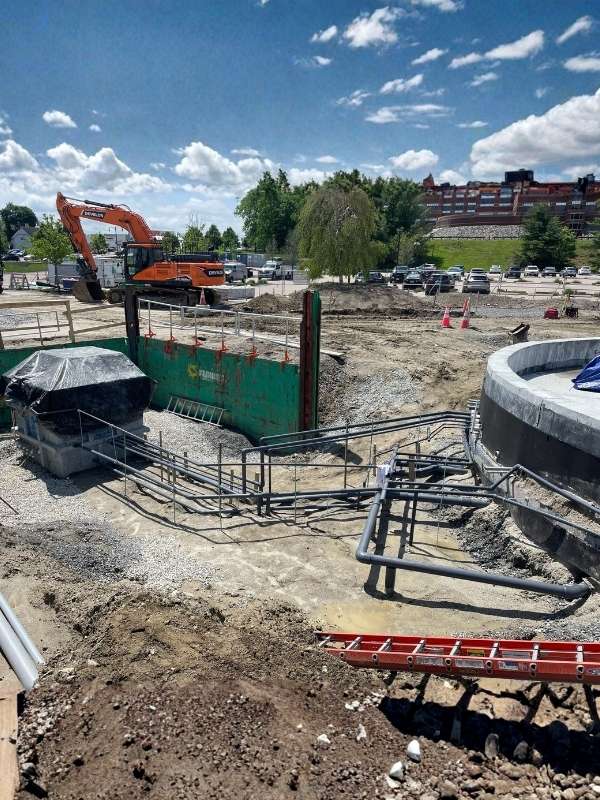
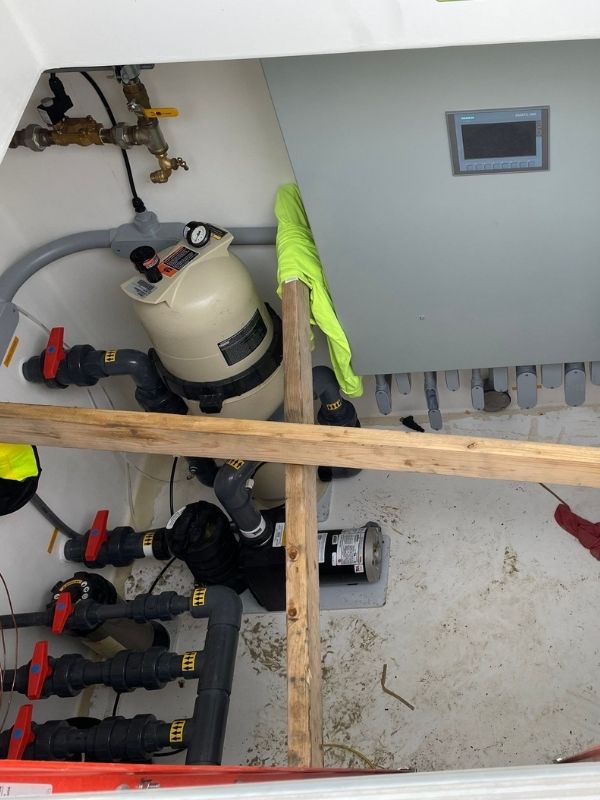
A fountain is a choreography of water and sound. We designed the pump house and partnered with mechanical specialists to size pumps, plumbing, and controls. Pumps provide pressure, pipes guide the flow, and valves act like dimmer switches for water. By tuning these elements we can create gentle sheets, lively cascades, or sparkling sprays. During commissioning we ran the system, listened, watched, and adjusted until the water patterns and sound matched the historic character of the courtyard.
Basin, Lighting and Site Integration
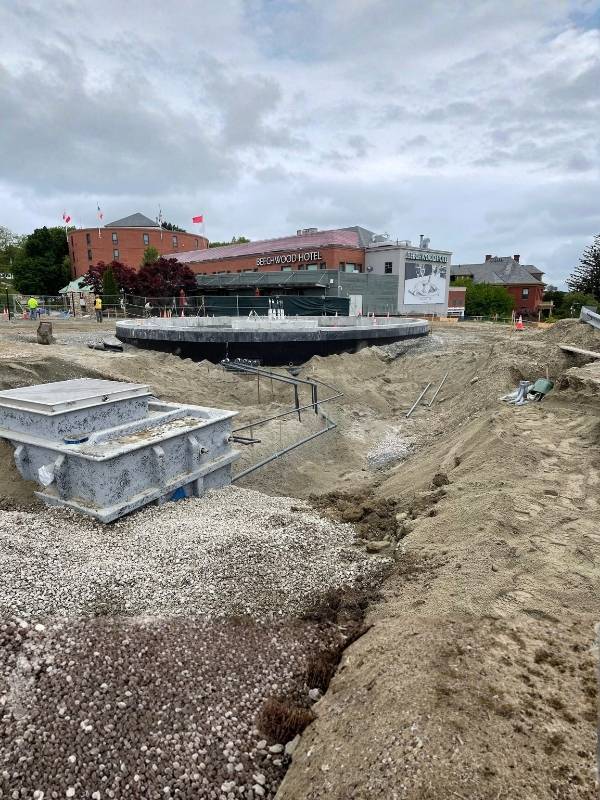
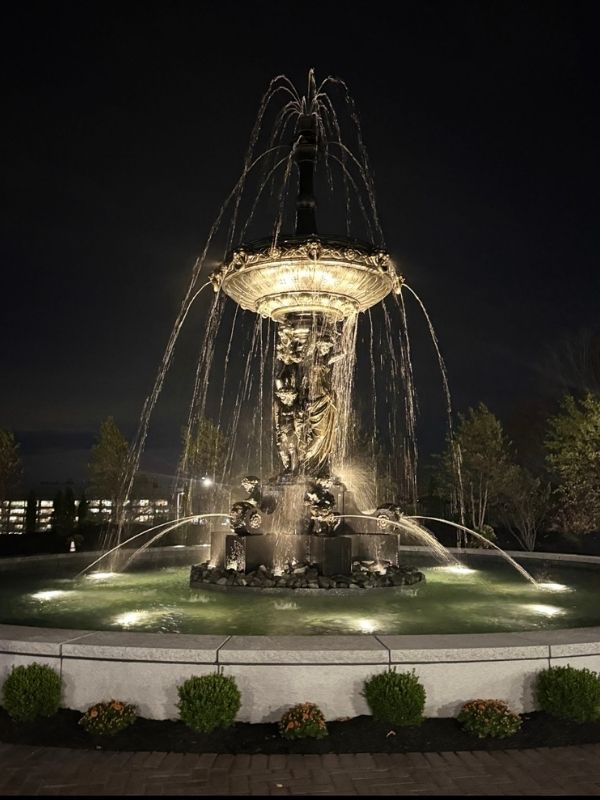
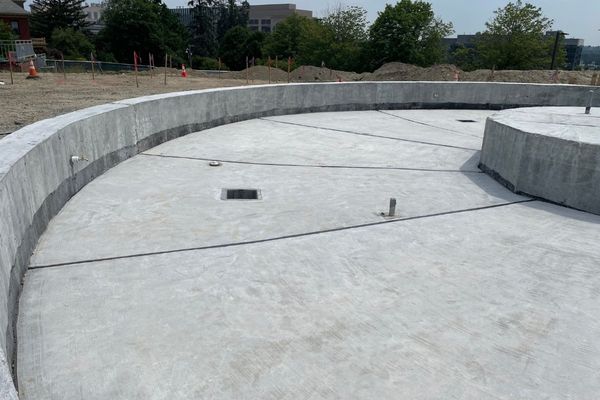
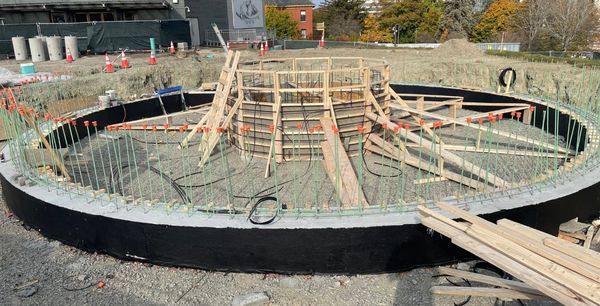
BSS designed the 50 foot lower basin, water effects, lighting approach, and elevations, then partnered with the owners to select a landscape and hardscape contractor. The basin is the fountain’s swimming pool. It must be watertight, the right depth, and shaped to catch the falling water without splashing the surroundings. Our lighting plan highlights the sculptural forms at night without glaring in guests’ eyes. The final layout anchors the fountain visually while supporting maintenance access and system performance.
Collaboration and Installation
Owners
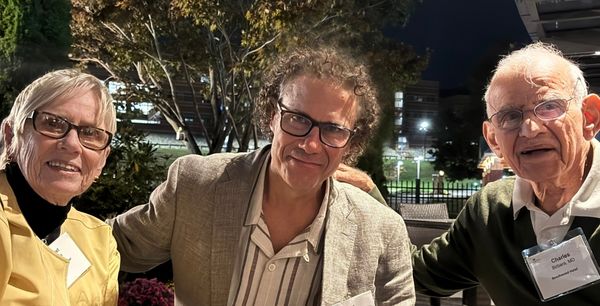
Dr. Charles and Janet Birbara
Engineering
Simpson Gumpertz and Heger
Landscape and Hardscape
LEI
Pump House and Plumbing Design
Delta Fountain
Pump House and Plumbing Installation
New England Air and Heat
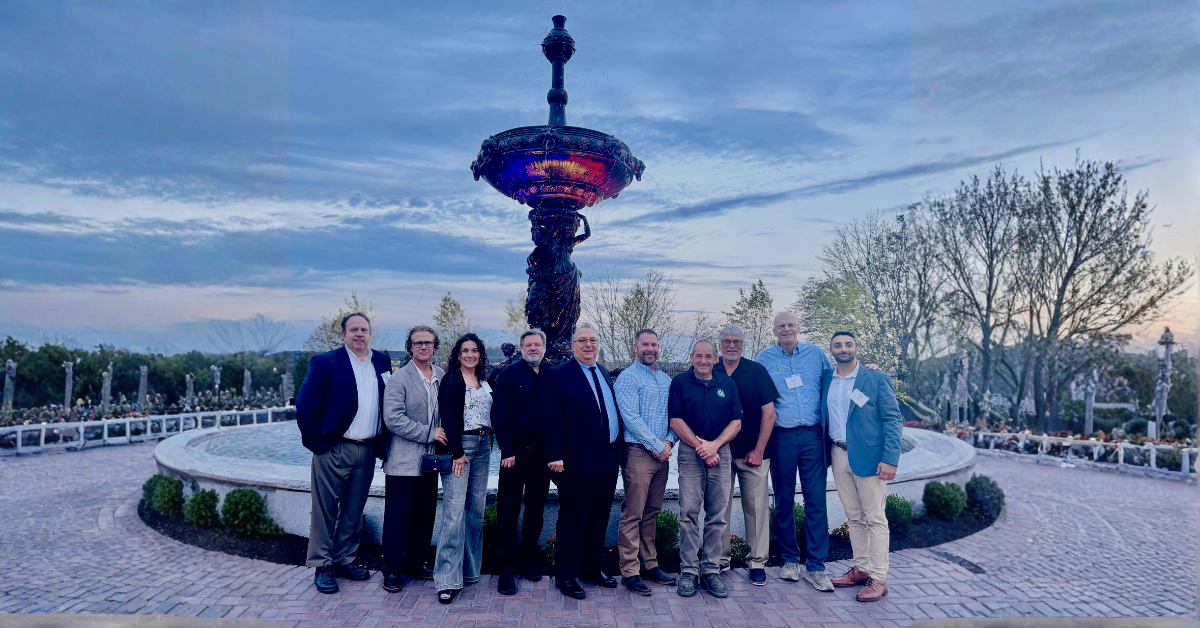
BSS coordinated design intent, fabrication, logistics, and site work with each partner. Clear drawings, checklists, and on-site reviews kept the reinstall clean and safe and set the team up for reliable daily operation after opening.
What We Delivered
- Comprehensive assessment and conservation plan with photo documentation
- 3D scanning and digital modeling of lost figures for exact replacement
- Precision mold making and metal casting at BSS
- Structural review and reinforcement of the 1980s framework
- New aluminum upper bowl and reproduced ornament
- Galvanic isolation detailing throughout to prevent dissimilar metal corrosion
- Pump house, plumbing, and control strategy sized for adjustability and service
- 50 foot basin design, lighting approach, elevations, and commissioning
Complete Fountain
Craft That Matches Your Standards
This project reflects the same full-service workflow we apply across restoration, conservation, and new fabrication projects, where traditional craftsmanship meets modern tools. Our team blends hands-on sculpting, mold making, and patination with 3D scanning, CNC, and careful engineering coordination so historic works look right and last long.
Considering a fountain restoration or new water feature?
From historic cast iron to contemporary bronze and aluminum, BSS handles design, engineering coordination, casting, finishing, and installation under one roof. Start a conversation with our team.